
Safe words are the minimum. Not the ceiling.
Every beginner learns the traffic light system. Green, yellow, red. And for good reason — it works. But here’s what the Fantasy Factory won’t tell you, what the surface-level advice skips entirely: safe words are a verbal tool. And there are situations — predictable, common situations — where verbal communication disappears.
A dominant who relies only on safe words is a dominant who has handed critical safety infrastructure to a system that can fail at exactly the wrong moment.
This is not an edge case. This is the rule.
Build redundancy into your communication system, or you are not actually doing what you think you’re doing.
When Safe Words Fail
Three scenarios. Every dominant needs to understand all three.
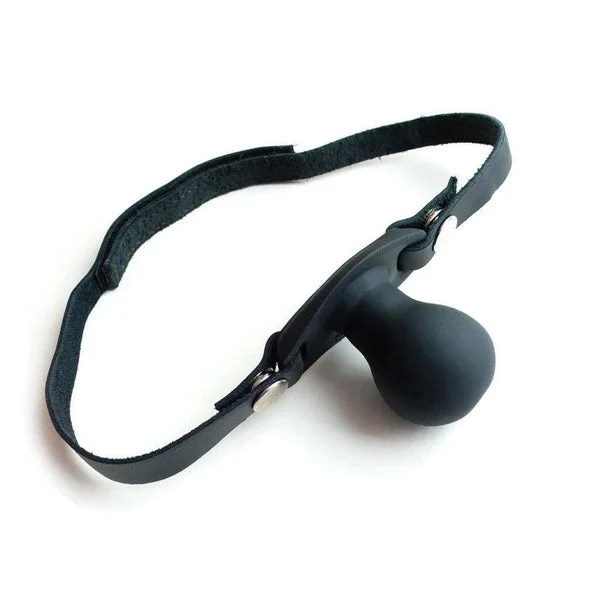
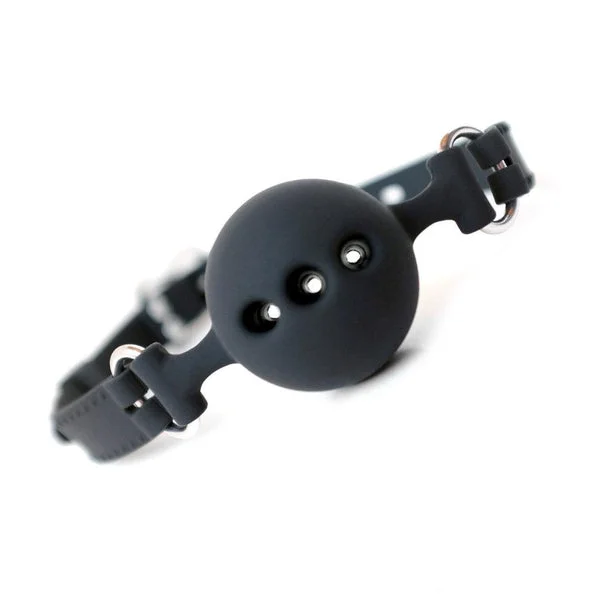
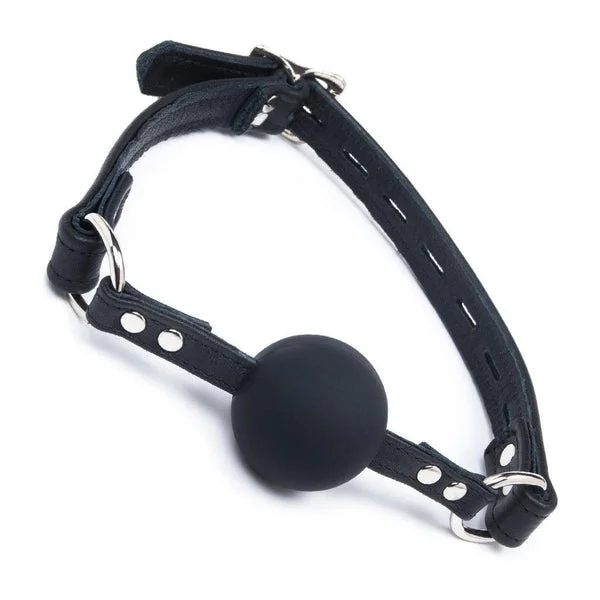
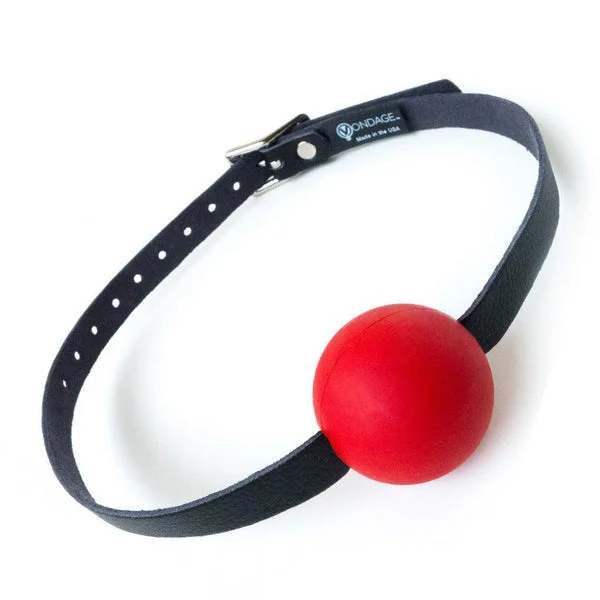
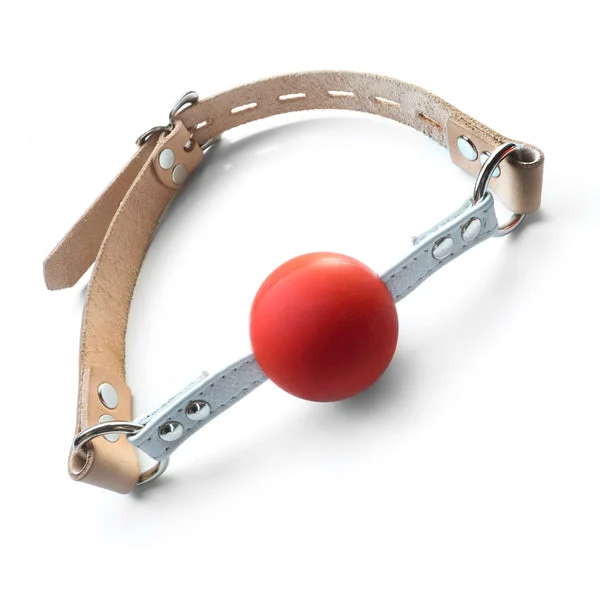
The gag problem is the obvious one. If your partner is gagged — ball gag, bit gag, tape, even a pillow — they physically cannot say “red.” The vocal channel is closed. And yet most beginners establish a verbal safe word, buy a gag, and never stop to bridge the gap between those two decisions. The Fantasy Factory didn’t teach them to. Neither did porn.
Subspace is subtler and more dangerous. When a submissive drops deep into subspace — that altered state of consciousness that comes from endorphins, adrenaline, and intense sensation — cognitive function degrades. The prefrontal cortex checks out. Your partner may be experiencing something profound and positive, but they may also lose the ability to clearly identify when too much has become too much, or to organize the thought into a word and deliver it. They’re present in their body. They’re not necessarily present in their language.
The freeze response is neither obvious nor subtle — it is silent. The freeze response is a real, documented trauma reaction. It is not a choice. When the nervous system encounters threat (real or perceived, physical or psychological), it can shut down volitional movement and speech entirely. A submissive in a genuine freeze is not choosing not to use their safe word. Their body has bypassed that option. If you’re relying solely on verbal communication, you will miss it.
A fourth failure point: intense sensation can simply overwhelm verbal capacity. Someone receiving heavy impact, or hitting an unexpected emotional trigger, may simply not be able to form words in that moment. The experience has consumed all available processing bandwidth.
None of this makes BDSM dangerous by default. It makes unthought-through communication dangerous. There is a difference.
The Traffic Light System (And Its Limits)
Green means continue. Yellow means slow down, I’m approaching a limit. Red means stop, immediately, no hesitation.
This system is good. Use it. Train it. But understand what it is: a verbal protocol. Three words. Simple to remember even in an elevated state, which is exactly why it was designed this way.
Its limits are simple: it requires the ability to speak. Which means it works for unobstructed, cognitively present submissives. That’s a lot of the time — and not all of the time. A dominant who has only this tool is a dominant with a single point of failure.
You need layers. Not instead of traffic lights. In addition to them.
Non-Verbal Alternatives
These are established, time-tested, specific. Agree on them before the scene. Practice them before the scene. Do not assume your partner will remember something you mentioned once in passing.
Squeeze systems are the most common backup for gagged play. Your submissive holds something in their hand — a ball, a set of keys, anything with grip — and agrees that three squeezes means stop. Two might mean yellow. One might mean check in. The logic is simple: squeezing requires minimal cognitive load, it’s hard to do accidentally, and the held object provides a tactile anchor during dissociative states.
Make sure the object is not something they’ll naturally grip during intensity. A soft stress ball works. Their own fist is unreliable. Test it beforehand — squeeze the object, feel the motion, confirm you can detect it.
Dropping a held object is a passive signal — it triggers on letting go rather than on action. The submissive holds the object. If they drop it, that is the stop signal. This works particularly well because dropping requires no active decision, only the cessation of holding. For someone in a freeze or overwhelmed state, ceasing to hold is often more available than initiating a squeeze.
Use something light with a sound: a set of keys, a small bell. You need to hear it hit the floor.
Tapping is the fallback when hands aren’t holding anything. Three taps on any surface — your arm, their own leg, the table, the floor. Distinct rhythm, consistent meaning. Tap out.
Head signals for gagged partners who aren’t restrained: one slow side-to-side head shake means stop. Two nods mean yes, okay, continue. These only work if you’re watching — which you should always be doing anyway.
Hand signals require prior agreement and clarity. A raised fist means stop. Flat palm means pause. Thumbs up means green. These work in low-noise environments with clear sight lines. They break down in dim lighting or during positions where hand visibility is limited. Know your setup before relying on them.
Reading Body Language
The observational layer is where experienced dominants earn their credibility. Non-verbal safety signals aren’t just systems your partner signals — they’re things you learn to read without prompting.
Tension patterns tell you almost everything. A relaxed submissive in flow moves fluidly; their body responds, adjusts, follows. When something is wrong — real distress, not productive intensity — the texture changes. Watch for jaw clenching. Watch for fists forming involuntarily. Watch for the particular rigidity that is not arousal tension but bracing-against tension. You will learn the difference with attention and time.
Breathing is your most reliable real-time indicator. Normal intensity changes breathing — heavier, faster, louder. But hyperventilation (rapid shallow breaths that aren’t slowing down), held breath (the chest stops moving entirely), or a sudden pattern shift from what you’ve established as their baseline are all signals to pause and check in. Held breath in particular is a freeze indicator.
Facial micro-expressions require proximity and attention. You’re looking for the difference between a face that is overwhelmed in a pleasurable way and a face that is overwhelmed in a frightening one. Fear has a particular signature: the eyes go wide and unfocused, or they squeeze shut in a way that’s different from pleasure. The brow pulls up and inward. The mouth corners pull down or back. It’s subtle. It’s readable.
Muscle rigidity vs. fluidity — already touched on, worth stating plainly. Fluidity suggests processing and integration. A body that goes completely rigid and unresponsive is a body that may be frozen. Don’t confuse this with deliberate stillness or restraint compliance. Frozen has a different quality.
Tears require context, not panic. Tears during intense BDSM play are not automatically a distress signal — they can be a release mechanism, a cathartic response, or a physical reaction to sensation. But combined with other signals — the rigidity, the breathing change, the facial expression — they tell you something is happening that needs attention. Do not ignore tears. Do not assume they’re fine either. Check in.
Dissociation signs are the most concerning. Glazed eyes that are present but not tracking you. Non-responsiveness to your voice when they should be able to hear you. A quality of absence, like the person has vacated the body. If you see this, you stop. Full stop. No question about breaking immersion, no finishing the scene, no “just one more.” You stop and you come back to them.
The Dominant’s Responsibility to Check In
There is an art to monitoring without hovering. Hovering breaks immersion and can actually undermine the psychological safety you’re trying to build — a submissive who feels constantly interrupted loses the ability to drop.
But checking in and hovering are not the same thing. One is structured and intentional. The other is anxious and reactive.
Verbal check-ins can be woven into the dynamic without breaking it. “Color?” delivered quietly, in a low voice, without pause in the physical scene, is barely disruptive. A hand that pauses briefly on their shoulder while you observe them is a check-in. Eye contact held for two seconds longer than usual is a check-in. None of these require stopping the scene.
Squeeze checks are active tests of responsiveness. During restrained or gagged play, periodically ask them to squeeze once for green. If the squeeze comes, you have confirmation of presence and consent. If it doesn’t, you pause and investigate.
Trust your instincts. This is not mysticism — it is pattern recognition that develops with experience and attention. When something feels off, something is probably off. The dominant who overrides that feeling to avoid breaking immersion is prioritizing the aesthetic of the scene over the safety of a person. That is precisely backwards.
If something feels wrong, stop and check. You can rebuild a scene. You cannot unsee what happens when you miss a real stop signal.
Building a Complete Protocol
Belt and suspenders. You wear one to hold your pants up. You wear the other as insurance.
Your communication protocol should be layered: verbal where possible, physical signals as backup, observational reading as the constant background. Every layer compensates for the failure modes of the layer above it.
Before every scene, agree on:
- Primary verbal safe words (traffic light or custom)
- Physical signal for when verbal is unavailable
- Held object or drop signal for gagged play
- Tap protocol as tertiary fallback
- Any specific signals relevant to this session’s activities
For new activities — especially anything that involves head or face, extended restraint, breath, or intense psychological content — run a dedicated conversation. Not a quick mention. A conversation. What does X feel like for you? What might you need me to watch for? What’s our signal if you hit something unexpected? Consensual degradation play is a specific case worth calling out here: verbal humiliation can trigger unexpected emotional responses even in people who enthusiastically wanted it, and a non-verbal stop signal is especially important when the dominant’s words are the scene itself.
Establish baseline before the scene starts. Ask a simple question. Watch how they respond. Listen to their breathing. Register their body language. This is your calibration. Everything you read during the scene will be measured against this.
Review after. Aftercare is where you debrief. What signals worked? What was hard to give? What did they wish they’d been able to communicate? This is how protocols improve. You are building a system that gets better with every scene, not repeating the same session indefinitely and hoping nothing goes wrong.
The Fantasy Factory skips this part. We don’t.
Frequently Asked Questions
What if my submissive doesn’t want to “interrupt” the scene to use a signal?
This is a trained response that needs to be addressed directly in negotiation, before play. Some submissives develop a pattern of not signaling because they don’t want to disappoint their dominant or break the scene. Your job is to make explicitly clear that using the signal is not a failure — it is the system working. A submissive who uses their signal correctly is doing exactly what you asked them to do. Reward it. Never express frustration when someone stops a scene for safety reasons.
Can I trust the squeeze system if my partner is heavily bound?
You need to test it in the actual configuration. Before the restraint goes on, put the object in their hand and confirm they can squeeze three times. If the restraint is too tight to allow reliable hand movement, the squeeze system isn’t available for this scene. Find another signal — tap the floor with their foot, a head signal, something that works with the actual constraints of the situation.
How do I tell the difference between freeze response and submissive stillness?
Quality of presence. A deliberately still submissive is present — their eyes track, their breathing has a pattern, small micro-movements show a body that is actively holding position. A frozen submissive is absent — unresponsive to voice, eyes glazed, a quality of vacancy. When in doubt, use their name and ask for a physical signal. If nothing comes back, stop.
My partner goes very deep into subspace. How do I know they’re okay?
Establish a baseline protocol before scenes that typically produce deep subspace. Build in consistent, gentle check-in moments — a hand on their face, their name spoken softly, a light squeeze to their shoulder and watching for response. Use the observational layer heavily: breathing, tension patterns, micro-expressions. And debrief thoroughly afterward to understand what their subspace experience was like and whether anything needs adjustment.
Is it possible to over-check in?
Yes. Constant verbal check-ins can prevent a submissive from dropping at all, and can signal that you’re anxious rather than in control — which itself undermines psychological safety. The answer is structured, efficient check-ins woven smoothly into the dynamic, not eliminated. One well-timed “color?” is worth more than ten anxious interruptions.
The Bottom Line
Safe words are the minimum required. They are not a complete communication system.
A complete system is layered. It works when speech is unavailable. It requires the dominant to read what isn’t being said. It is built explicitly before every scene and refined after every scene.
This is what separates a dominant who is actually safe from a dominant who believes they are because nothing has gone wrong yet.
Those two things are not the same.
Want to understand how consent and communication work together across the full D/s dynamic? Read the complete guide to consent in D/s relationships — including how to negotiate limits before you play.
Working with gags or extended restraint? The guide to gags and silencing covers equipment selection and safety protocols specific to obstructed communication.
Haven’t established your hard and soft limits? That conversation needs to happen before any of this matters — start with navigating hard and soft limits.
Not sure where your own dynamic should start? Take the quiz and find your path.