
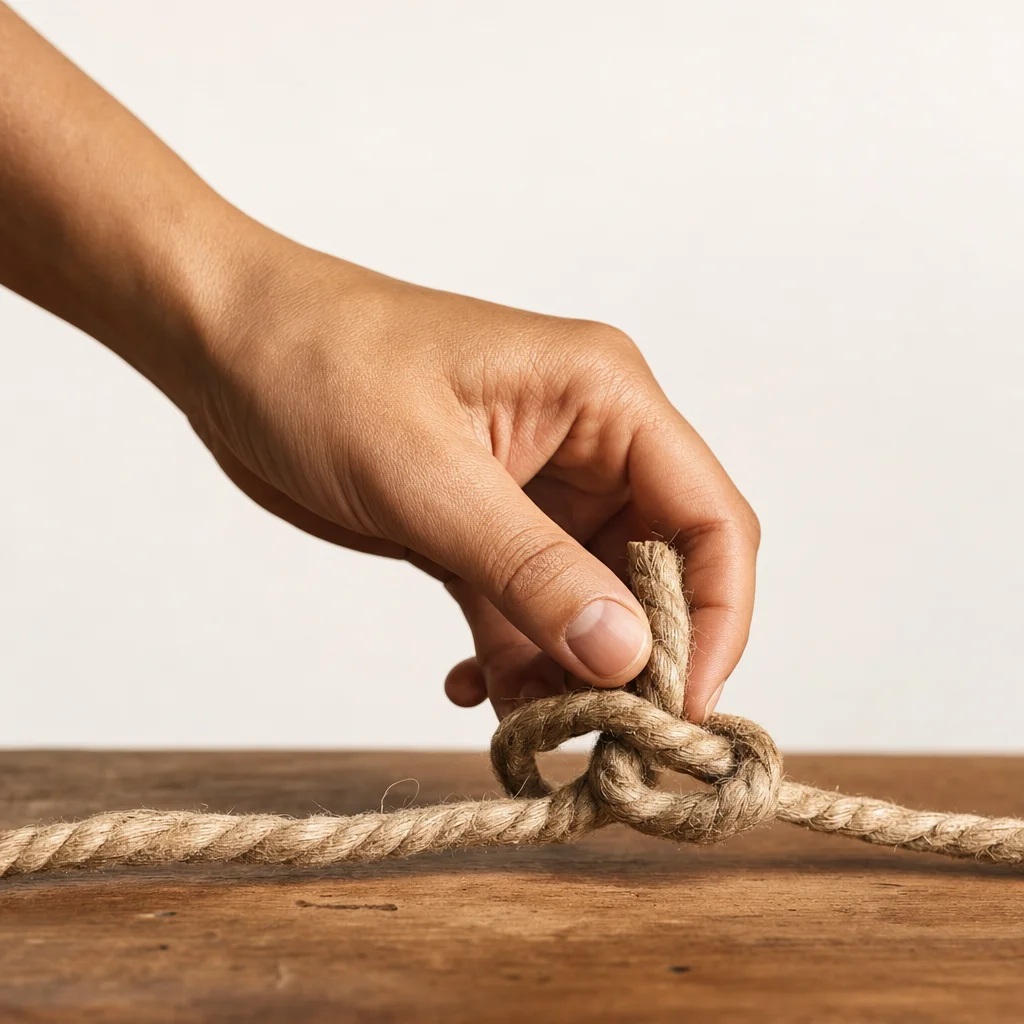
Most people who say “shibari” mean “I want to tie someone up with rope and it looks beautiful.”
That’s not wrong. But it’s also about a quarter of what shibari actually is.
The word gets used interchangeably with “rope bondage,” which is like using “ballet” to mean “exercise that involves feet.” Technically adjacent. Practically, a different thing.
Shibari — and its older, more technical name kinbaku — is a discipline. It has a history that goes back centuries, a visual language that evolved deliberately, a physical vocabulary of patterns that carry specific meanings, and a psychological dimension that neither Instagram accounts nor beginner tutorials spend much time on. It also has documented physical risks that are not fully captured by the phrase “be careful.”
I’m not writing this to gate-keep. If you want to wrap someone in decorative rope patterns and call it shibari, nobody’s going to arrest you. But if you’re serious about this — about doing it well, doing it safely, and understanding what you’re actually doing when you do it — you need more than aesthetics.
This guide covers what shibari actually is, where it came from, how it differs from Western bondage, what the tools and roles look like, what floor work and suspension mean, the foundational ties (and the one that injures the most beginners), how to learn it properly, and what the psychology of being tied and doing the tying actually involves.
It doesn’t contain tying tutorials. That’s not a failure of the format — it’s honesty about what a text guide can safely deliver for a practice that requires hands-on mentorship.
Quick Answer: What Is Shibari?
Shibari (緊縛) is the Japanese art of rope bondage — a practice that uses jute or hemp rope to create patterns on the human body that are aesthetic, psychological, and physically demanding. It comes from Edo-period rope restraint techniques (hojōjutsu) and was adapted in the early 20th century for performance and intimate contexts. Modern shibari includes both floor work (ties on the ground) and suspension (lifting a partner with rope). It is NOT the same as Western bondage — the rigor of the patterns, the dynamic between rigger and rope bunny, and the focus on connection over restraint set it apart.
What Shibari Actually Is (and Isn’t)
Let’s start with the misconceptions, because they’re doing real damage.
Shibari is not just decorative rope patterns. The visual appeal is real — jute against skin, geometric patterns following the body’s contours, the way a chest harness can create a kind of wearable architecture. But treating shibari as an aesthetic choice the way you’d choose a filter is missing the point entirely. The patterns are a language. The knots are physical consequences of intention.
Shibari is not the same as BDSM rope bondage in general. Western bondage is often about restraint — the goal is that the person being tied can’t move freely. Shibari is about something more layered: the connection between rigger and rope bunny, the psychological state created by sustained rope contact, the specific patterns that have evolved as a vocabulary over decades. You can be restrained in shibari, but restraint is often incidental to what’s actually happening.
Shibari is not inherently sexual. It often is — context and intent determine that. But shibari is practiced by people who are not romantically or sexually involved, at events and workshops, in studio photography, and as a form of meditation or physical practice in its own right. The Western assumption that anything involving bodies and rope must be sexual is a projection, not a description.
Shibari is not safe to learn from YouTube alone. This is not an opinion. This is a position held by virtually every serious practitioner and teacher in the global rope community. The TK (Takate Kote), the most photographed shibari tie, has a well-documented risk of nerve damage in certain bodies and certain positions — even when performed by experienced riggers. You cannot see nerve pathways in a tutorial video. You cannot feel what your partner feels. Hands-on mentorship exists for a reason.
What shibari is: a practice that requires sustained study, physical presence, communication, and humility. Done well, it creates an experience — for both rigger and rope bunny — that is unlike anything else in the BDSM world. Done carelessly, it sends people to emergency rooms.
A Brief History: From Hojōjutsu to Modern Practice
Shibari’s origins are in hojōjutsu — the Japanese martial art of rope restraint used by police and military during the Edo period (1603–1868). Hojōjutsu was functional: it immobilized prisoners and suspects in ways that demonstrated the captor’s authority and prevented escape. The patterns were not arbitrary. Different patterns communicated social status, the severity of the crime, and the prisoner’s treatment under the law. Rope was administrative technology.
This is where the aesthetic dimension of Japanese rope bondage has its roots. The patterns mattered because they communicated. That’s a different starting point than Western rope bondage, which developed largely from sailing, climbing, and general restraint contexts without the same emphasis on meaning encoded in pattern.
The transition from hojōjutsu to what we now recognize as shibari or kinbaku happened in the early 20th century, with the figure of Seiu Ito frequently cited as a key bridge. Ito was an artist who became obsessed with the erotic and aesthetic potential of the rope restraint patterns he had studied from historical sources. His paintings and photographs brought the visual language of hojōjutsu into contexts that were explicitly aesthetic and erotic — a significant departure from the administrative origins. His work was controversial, went underground during more conservative political periods, and surfaced again after World War II in a different context.
The postwar Japanese kink scene — through publications, theaters, and eventually early photography and film — developed kinbaku as a performance and intimate art form. The term kinbaku (緊縛, literally “tight binding”) tends to be used for this performance lineage and for the more traditional Japanese practice. Shibari (縛り, literally “to bind”) is the broader contemporary term, used internationally to describe Japanese-influenced rope bondage. You’ll see both terms and the distinction matters to some practitioners more than others.
By the 1990s and 2000s, Japanese rope teachers — nawashi, the rope masters — began teaching internationally. Festivals, workshops, and residential intensives spread shibari practice across Europe, North America, and beyond. The global rope community that exists today is a direct result of that transmission.
The cultural context is worth naming honestly: shibari has been taken out of its Japanese context, taught primarily by non-Japanese practitioners in most Western markets, and influenced by Western BDSM frameworks that weren’t part of its origin. This isn’t the place for a full cultural appropriation debate, but it’s worth knowing that the rope you’re learning didn’t start as a Western kink practice. Engaging with where it came from — including the hojōjutsu documents, the early 20th century artists, and the postwar kinbaku community — is part of taking it seriously.
Shibari vs Western Bondage: The Real Difference
| Shibari / Kinbaku | Western Rope Bondage | |
|---|---|---|
| Primary Goal | Connection, aesthetic, psychological state | Restraint, sensation, control |
| Pattern emphasis | High — patterns carry meaning and history | Low to moderate — function over form |
| Rope type | Jute or hemp (traditional); natural fiber | Variable — nylon, cotton, leather, synthetic |
| Rigger role | Nawashi — significant responsibility, presence | Dom or top — varies widely |
| Psychological dimension | Central — rope space is part of the practice | Varies — often secondary to physical sensation |
| Learning culture | Apprenticeship, workshops, mentorship | More DIY, YouTube-accessible |
| Suspension | Common in advanced practice | Less systematic, higher variation |
| Risk culture | Generally explicit and discussed | Variable — sometimes underemphasized |
Neither is superior. They’re different practices with different goals. If you want to tie your partner to the bed headboard for a fun restraint scene, you don’t need to learn shibari. If you’re drawn to the depth, the aesthetic language, the psychological intensity, and the particular kind of connection rope creates — shibari is worth the years it takes to learn it properly.
The Tools: Jute Rope vs Hemp vs Synthetic
The rope conversation happens early in every shibari learning path, and it generates strong opinions. Here’s what you actually need to know.
Jute is the traditional material for shibari. It’s a plant fiber with a texture that grips rather than slides, which makes knots more stable and patterns more precise. Properly conditioned jute has a particular smell — earthy, slightly woody — that many practitioners find part of the sensory experience. It marks the skin. It requires conditioning and care. Jute is not beginner-friendly. Stiff when new, it requires breaking in, and raw jute can scratch and abrade sensitive skin. Expect to spend weeks conditioning new jute before it’s appropriate for body use.
Hemp is the other traditional natural fiber, slightly more forgiving than jute, less prone to the harshness of unconditioned jute, still carrying texture and grip. It’s used by many serious practitioners who find jute too demanding to maintain. The distinction between hemp and jute matters less than whether the rope is natural fiber vs synthetic and whether it’s been properly prepared.
Cotton is where most beginners should start. Soft, forgiving, easy to wash, less likely to cause friction damage during the learning phase when you’ll be untying and retying constantly. Cotton doesn’t hold patterns as precisely as jute — the aesthetics are less dramatic — but the beginner period is not about aesthetics. It’s about learning to tie safely and developing awareness of your partner’s physical state. Cotton gives you margin for error that jute doesn’t.
Synthetic rope (nylon, MFP) is practical for general bondage but not ideal for shibari. The sliding quality creates problems — knots can tighten more than intended under pressure, which increases risk. Synthetic rope also doesn’t absorb sweat and skin contact in the same way, creating a different (and generally less pleasant) experience.
Diameter and length: 6mm is standard for shibari. Thinner rope distributes less pressure per surface area and bites more acutely — useful for some effects, more dangerous for beginners who don’t yet have precise placement. Start with 8-meter lengths (roughly 26 feet). Most foundational ties use one or two 8-meter lengths. A full rig can use significantly more.
The tools are important but they’re not where you should be spending most of your attention in the first six months. A complete beginner with cotton rope and good mentorship will develop better than a complete beginner with expensive jute and YouTube tutorials.
The Roles: Rigger and Rope Bunny (Nawashi and Modèle)
The traditional Japanese terms are nawashi (the one doing the tying, literally “rope person”) and ukete (the one being tied, literally “receiver”). In contemporary Western practice you’ll more commonly hear “rigger” and “rope bunny” or “rope bottom.” French-influenced communities sometimes use “modèle” for the person being tied, particularly in aesthetic or photographic contexts.
The rigger’s role is active, technical, and heavily responsible. You are managing your partner’s physical safety in real time — monitoring circulation, checking nerve function, tracking how long each tie has been on, reading subtle signs of physical or psychological distress. You are also creating the tie, which requires spatial awareness, knowledge of the patterns, and enough physical control to be precise without rushing. Riggers tend to enter a state of intense focus during tying — the rope community sometimes calls this “rigger’s space,” analogous to the rope space that rope bottoms experience.
What riggers often underestimate: the responsibility doesn’t pause. Even when a beautiful tie is complete and the scene has the quality you were after, you’re still monitoring. Rope doesn’t remove itself if your rope bunny starts experiencing nerve compression. The focus that makes a good rigger is the focus of sustained attention, not the one-time focus of completing a pattern.
The rope bunny’s role is active, not passive. This is one of the places the Fantasy Factory does consistent damage — the idea that being tied means relinquishing all agency and drifting blissfully. In practice, rope bottoms carry enormous responsibility. They need to accurately report physical sensations — particularly the early warning signs of nerve compression (tingling, numbness, weakness, burning) that require immediate response. They need to communicate about psychological state. They need to not grit through discomfort because they don’t want to interrupt a tie that looks beautiful.
The capacity to surrender psychologically while remaining communicatively present is a real skill. It develops over time. New rope bottoms often either over-communicate (interrupting the flow of the scene unnecessarily) or under-communicate (masking warning signs out of a desire to be a “good” rope bunny). Both are understandable. Neither serves the actual goals of the practice.
For more on the dynamics between dominant and submissive partners, including trust as the foundation, read the trust-building guide.
Floor Work vs Suspension
Shibari exists on a spectrum of complexity and risk. Understanding the distinction between floor work and suspension is not optional — it determines your entire learning path.
Floor work (or ground work, or “kinbaku on the floor”) is shibari performed with the rope bunny on or near the ground. This includes seated ties, kneeling positions, prone positions, and sitting or standing ties where the rope bunny’s weight remains supported by the ground or furniture rather than the rope itself. Floor work is where virtually all serious teachers want beginners to spend their first several years.
Floor work is not less interesting than suspension. Many of the most psychologically intense and aesthetically striking pieces in the shibari world are floor work. The intimacy of close-range tying, the weight of rope building across the body, the physical and psychological effects of prolonged immobility — none of this requires anyone to leave the ground.
Suspension involves lifting the rope bunny off the ground, either partially (one foot maintaining contact, for instance, in “semi-suspension”) or completely (“full suspension”). Suspension is where the physical risk profile increases dramatically.
In suspension, the forces on the body are different. Weight distribution, nerve compression, joint stress, and circulatory pressure all change when gravity is pulling on a suspended body rather than supporting it through the ground. A partial nerve compression in floor work that you might have time to recognize and address becomes an acute emergency in suspension because the weight of the body is actively increasing the pressure.
The shibari community is nearly unanimous on this: suspension requires years of floor work to prerequisite and should be learned with hands-on mentorship from an experienced suspension rigger, not from video. The difference between someone who’s ready for suspension and someone who thinks they’re ready is not visible from the outside.
If you’re new to rope, suspension is not a goal for this year. Get good at floor work. It will take longer than you expect.
The Big Three Essential Ties (and Why You’ll See Them Everywhere)
Three ties appear across shibari education, photos, and workshops more than any others. Understanding what they are — without attempting to learn them from text — is useful orientation.
The Single Column Tie is the foundational wrist or ankle tie. A “column” is any limb being tied. The single column tie is the entry point for almost all shibari education because it’s the building block everything else connects to. It creates a cuff-style wrap that distributes pressure and is designed to be escape-resistant without cutting off circulation. Getting the single column tie genuinely right — right tension, right placement, right knot structure — takes more practice than most beginners expect. Getting it wrong creates the conditions for nerve damage at the wrist and hand.
The Two Column Tie binds two limbs together — typically wrists, or ankles, or wrists to thighs. It builds on the single column tie, connecting two points in a way that limits movement. It’s foundational for countless floor work and basic restraint patterns.
The TK (Takate Kote), sometimes called the “box tie” or “gote,” is the chest harness you’ve seen in nearly every shibari photograph. Wrists bound behind the back, arms folded with forearms parallel, rope creating a structured harness across the chest and upper back. It is visually distinctive, structurally complex, and the tie with the most documented nerve injury history in shibari practice.
The nerve at risk in the TK is primarily the radial nerve, which runs along the back of the upper arm and through the armpit region. The anatomical path of this nerve varies person to person — and this is not a metaphor. Some bodies simply have nerve paths that put them at substantially higher risk in TK configurations regardless of the rigger’s skill. There are people who should not be in TK at all. There are body shapes and arm structures that require significant modification to the standard tie. There are riggers with years of experience who have still caused radial nerve injury in TKs.
This is not a reason to never learn TK. It is a reason to learn it from someone experienced, to go slowly, to prioritize communication about arm sensation above everything else during TK work, and to take seriously the research and harm-reduction resources the rope community has developed around this specific tie.
For step-by-step guidance on these foundational ties with proper safety context, read the shibari for complete beginners guide.
Safety: What You Cannot Get Wrong
This section is not a complete safety guide. That exists separately. This is the minimum: the non-negotiables that every rigger must have internalized before any rope touches any person.
Have safety scissors present, not nearby. EMT shears or blunt-tip bandage scissors, within arm’s reach at all times. Not in a bag. Not across the room. If something goes wrong, the response time required for rope emergencies is measured in seconds. A beautiful scene is not worth sacrificing thirty seconds of retrieval time.
Know nerve compression warning signs, both of you. Tingling, numbness, burning sensation in the hands or fingers, weakness in grip, any sudden change in sensation in the arms — these require immediate response. Not adjustment. Untie. The scene can continue after nerves are confirmed healthy. It cannot continue from a hospital bed.
Check circulation actively. “Make a fist” is an active nerve function test. Passive observation of color and warmth is circulation monitoring. Both matter. Do both. White or blue fingertips mean stop now.
Never tie the neck. Not at beginner level, not at intermediate level, not as a brief artistic choice. Rope at the throat can cause unconsciousness or death in seconds. There is no artistic or erotic justification that makes this risk acceptable for rope work.
Sober practice. Rope requires clear communication and real-time physical awareness from both people. Alcohol and substances blunt both. The rope community’s position on this is not complicated: if one or both of you are impaired, the scene doesn’t happen.
Time limits. Sustained compression accumulates damage even when individual moments feel fine. Beginners: thirty minutes maximum on any single tie, less for upper body or TK work. Build in regular checks. Shorter sessions with communication are safer than longer sessions without.
Aftercare matters. The physical and psychological intensity of rope work — for both rigger and rope bunny — creates need for intentional landing afterward. For a complete guide to what good aftercare looks like, read the aftercare complete guide.
For comprehensive rope safety protocols, the safety tips for shibari beginners guide covers anatomy, equipment, and emergency response in detail.
The Psychology of Being Tied
Rope space is real. This is worth stating plainly because some practitioners are skeptical of psychological language in kink contexts, and also because the Fantasy Factory has so thoroughly romanticized the experience that people arrive with expectations that don’t match what actually happens.
Rope space is a term for the altered psychological state that many people enter during rope work. It shares features with what’s sometimes called “subspace” — a narrowing of attention, a release of ordinary cognitive chatter, sometimes a floating or dissociative quality, often a profound sensation of presence with the rigger. The mechanism isn’t fully understood. The experience is well-documented across the rope community.
What produces it: the sustained tactile pressure of rope against the body, the physical constraint of limited movement, the attention of the rigger (which rope bottoms often describe as palpable — the sense of being completely held in someone else’s awareness), and the passage of time in a state of enforced stillness.
What it demands: rope bottoms in rope space need to maintain the capacity to communicate warning signs even as ordinary verbal fluency may decrease. This is one of the genuine challenges of the practice. The deepest, most desirable states of rope space are also the states where it’s most difficult to interrupt the scene to say “I’m losing sensation in my left hand.” Establishing physical signals — drops, taps, held objects that can fall — in pre-scene negotiation addresses this directly.
The ego dissolution quality that some rope bottoms describe — the experience of simply being body, being present, thinking nothing — is often cited as one of the primary reasons people return to rope work. It is a particularly complete form of being out of your head, facilitated by another person’s sustained attention. That dynamic — the rigger’s total presence creating the condition for the rope bunny’s total absence from ordinary thought — is one of the things that shibari does that restraint alone doesn’t.
Not everyone experiences rope space. Body type, psychological profile, nervous system regulation, relationship to the rigger, and dozens of other variables affect whether and how deeply it occurs. It doesn’t make someone a better or worse rope bunny if it doesn’t happen for them.
For context on the psychology of submission and what’s happening in these altered states, read the complete guide to surrender dynamics.
The Psychology of Tying
The rigger’s experience is less discussed, which is a gap.
Tying well requires a form of attention that most people don’t normally sustain. You’re tracking the physical state of your rope bunny in real time — color, breathing, micro-expressions, verbal and non-verbal signals. You’re executing a physical pattern that requires both precision and adaptability. You’re creating something aesthetic, if that’s part of your intention. And you’re holding the relational space of the scene — its pace, its tone, its emotional quality.
The focus this demands tends to quiet everything else. Many riggers describe their own version of “rigger’s space” — a state of intense present-moment awareness where the ordinary noise of daily life simply stops. The rope is the whole world. The rope bunny is the whole world.
This is also where the responsibility dimension becomes most visible. The focus is not only pleasurable — it comes attached to the reality that you are holding someone’s safety. Every knot you tie is a choice with consequences. The person in your rope is trusting you with their nervous system, their circulatory system, their psychological state. The weight of that — not as anxiety but as presence — is part of what serious riggers describe as the defining quality of the practice.
The ego dimension worth naming: shibari attracts, among others, people who want to demonstrate skill, create beautiful images, or establish dominance through aesthetic mastery. None of those motivations are disqualifying. But they become problems when the rigger’s investment in the visual or the performance comes ahead of the rope bunny’s actual experience. Beautiful work done on someone who isn’t psychologically present, or who is showing early signs of nerve compression, is not good rigger work regardless of how it photographs.
The dominance in shibari is earned through attention, not claimed through aesthetics. For the broader principles of earned authority in D/s dynamics, read how to dominate a submissive and the trust-building guide.
Getting Started: Where to Actually Learn
This is where a lot of shibari content becomes dishonest by omission.
YouTube exists. There are good tutorials online. Shibari Study, Crash Restraint, and similar platforms have structured curricula that are better than random videos. These are genuinely useful resources.
They are not sufficient for learning to tie safely.
The reason is not gatekeeping or intellectual property — it’s the fundamental limitation of video for teaching a tactile, real-time physical practice. You cannot learn to feel what your partner feels from watching someone else tie. You cannot develop the ability to read nerve compression warning signs from footage. You cannot receive correction on your positioning, your tension, or your pattern precision from a screen.
In-person workshops are the standard path, and they exist in most major cities. Look for events with:
- Teachers who emphasize safety protocols as primary, not secondary
- Hands-on time under supervision, not just demonstration
- Small enough groups that instructors can observe your work
- Clear communication about what the workshop will and won’t cover
Jam sessions — informal community practice events where riggers and rope bottoms come together to practice — are often where real skill development happens, particularly after you have foundational technique. The rope community in most cities is more accessible than it looks from the outside.
Respected names in contemporary rope education include Esinem, Wildties, Lazuli, and many others who teach internationally and have produced structured curricula. I’m not endorsing specific teachers here — regional reputation matters enormously, and who’s actually good to learn from in your city requires talking to the local community.
The honest timeline: expect a minimum of twelve to eighteen months of regular practice under mentorship before you have enough floor work to start thinking about semi-suspension. Expect years before full suspension. The rope community’s occasional frustration with beginners who rush this timeline isn’t elitism — it’s people who’ve watched injuries happen.
The dom burnout that can come from the relentless responsibility of rigger work is also worth being aware of, particularly as your practice develops. Read dom burnout: recognizing and preventing it for early warning signs and how to address them.
Common Mistakes Beginners Make
Prioritizing aesthetics over safety. The photograph looks incredible. The nerve damage is also real. These are not in competition until you start making choices that favor the visual over your partner’s actual state.
Treating YouTube as a complete education. You’re not just learning patterns. You’re learning to feel, to read, to respond in real time. That part doesn’t come from video.
Skipping the single column tie because it seems too basic. Every advanced rigger has a single column tie that’s genuinely good. Every beginner who rushed past it has technique problems they carry forward. Get it right.
Assuming the rope bunny will tell you if something is wrong. Many rope bottoms, especially newer ones, will not interrupt a beautiful scene to report early warning signs. This is not stubbornness — it’s a combination of wanting to be a “good” partner, being in rope space, and not wanting to disappoint the rigger. Check proactively. Don’t wait.
Over-relying on safewords. Verbal safewords require verbal capacity. People in deep rope space sometimes lose that. Establish physical signals. Keep them simple. Use them.
Moving to suspension before floor work is solid. The ground is unforgiving in a different way than the air. Build your floor practice first.
Neglecting aftercare for the rigger. Rope bottoms often receive good aftercare. Riggers often don’t, partly because they spend the immediate post-scene time providing it. The attentional and emotional output of serious rope work requires landing too.
Common Questions
Is shibari the same as kinbaku?
Related but distinct. Kinbaku (緊縛) is the older, more traditional Japanese term, often used to refer specifically to Japanese practitioners and the performance lineage of rope bondage that developed in the 20th century. Shibari (縛り) is the contemporary international term for Japanese-influenced rope bondage and is used more broadly. In practice, many people use them interchangeably. If you’re in a conversation with Japanese practitioners or people trained in the traditional lineage, the distinction carries more weight.
How long does it take to learn shibari safely?
Longer than you think. A commonly cited benchmark: six months to a year of regular practice to develop a foundation in basic floor work ties. Two to three years before considering semi-suspension. Longer before full suspension. The timeline depends heavily on how often you practice, whether you’re getting mentorship and feedback, and whether your practice partner is communicating actively. There is no shortcut here that isn’t also a safety compromise.
Can you do shibari without a partner?
Self-bondage exists, but it’s a different practice with its own specific risks (primarily: you cannot untie yourself in an emergency the same way a partner can). Traditional shibari is a relational practice — the dynamic between rigger and rope bunny is central to what it is, not incidental. You can practice knots and patterns alone on a mannequin or piece of furniture to develop technique. The actual practice requires a partner.
Do you need to be in a D/s dynamic to practice shibari?
No. Shibari is practiced in D/s relationships, in vanilla relationships where rope is an addition rather than a framework, in non-romantic partnerships between a rigger and a rope model, and in community settings that aren’t explicitly about power exchange at all. The relational dynamic in shibari has its own character — the rigger holds significant responsibility and presence, the rope bunny offers significant trust — but this doesn’t require a formal D/s structure around it. Many practitioners who do have D/s relationships in other areas practice shibari outside of that frame.
What rope should beginners buy?
Cotton, 6mm, 8-meter lengths, three or four of them. Specifically marketed for bondage or shibari. Not craft rope, not macramé rope, not the random rope from a hardware store (which varies wildly in material and treatment). Budget options exist. You don’t need to spend a lot. You need rope that won’t abrade skin unpredictably and that moves cleanly through knots while you’re learning.
Is shibari sexual?
Often, yes. Also sometimes no. Shibari can be deeply erotic, emotionally intimate, aesthetically focused, athletically demanding, meditative, or some combination of all of these. What it is in a given session depends on the people involved and the intent they bring to it. The assumption that rope bondage is inherently sexual reflects the broader tendency to collapse all BDSM into sex — which does a disservice to the range of what actually happens in these practices.
Why is shibari so popular in Western BDSM right now?
A few things converging. Japanese rope aesthetic found an enormous audience through social media at the same time that high-quality photography and documentation became accessible. Shibari Study and similar platforms made structured learning available globally in a way that didn’t previously exist. There’s also a genuine reaction against the impersonal, transaction-focused end of BDSM — shibari’s emphasis on connection, presence, and the rigger-rope bunny dynamic appeals to people who want depth rather than performance. The Instagram effect is real but it’s also partly a gateway: people see the aesthetics and then discover the practice.
Can shibari be dangerous?
Yes, and the answer deserves more than a qualification. Permanent nerve damage from improper TK technique is documented, not theoretical. Suspension accidents have caused serious injuries. Even basic wrist ties can cause nerve compression if poorly executed or left on too long. The rope community’s emphasis on safety culture, in-person mentorship, and gradual progression isn’t paranoia — it reflects the actual injury record of a practice that puts ropes under pressure against human bodies. You can practice shibari safely. You cannot practice it safely without taking the safety dimension seriously.
Best for
Adults curious about shibari beyond the aesthetic — who want to understand what it actually is before deciding whether to learn it.
Skip if
You’re looking for tying tutorials with diagrams — that’s a different format. Start with shibari for complete beginners or find an in-person workshop.
Where to Go From Here
If this got you interested in actually learning rope, not just understanding it, the next steps are practical:
The technique foundation: Shibari for Complete Beginners — Your First 5 Ties covers the foundational ties with real safety context. This is where the instruction starts.
The safety layer: Safety Tips for Shibari Beginners covers nerve anatomy, equipment, session structure, and what to do when things go wrong. Read it before you pick up rope.
The broader toolkit: Rope is one element. The Dominant’s Arsenal covers the full range of tools and how to think about building your practice.
Community and learning: The BDSM podcast world includes regular coverage of rope from practitioners. BDSM podcasts worth following cover rope community news, educator interviews, and the kind of practical discussion you don’t get from tutorials.
Shibari rewards the people who approach it with patience. The practitioners who are genuinely good — who create the images you saw and thought “I want to do that” — got there through years of slow, careful, floor-level work. That’s available to you. It’s not fast, but it’s real.
The Fantasy Factory version of rope bondage is a costume. This is what’s underneath it.